Exterior Structure
The movements of the moon
The moon motion is in different type of ways. For instant, it rotates on its axis, an imaginary line that attaches its poles. The moon also revolves around Earth. Difference in the amount of light on the section that is light up is viewable in phases due to the revolving of the moon around earth. Throughout the event named eclipses, the moon lies in line with Earth and the sun. The motion called liberation allows us to see roughly 59 percent of the moon's surface at various times.
The exosphere of the moon
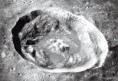
The substances surrounding the moon make up the lunar “atmosphere” which contains mostly of gases that comes in as the solar wind. The solar wind is a continually flow of gases from the sun typically hydrogen and helium, beside with other neon and argon. The rest of the gases in the exosphere create on the moon. A continuous "rain" of micrometeoroids heat ups lunar rocks, dissolving and evaporating their surface. The majority average atoms in the vapor are atoms of sodium and potassium. the elements are there in little quantities just a small hundred atoms of every per cubic centimeter of exosphere. Together with the vapors created by impacts, the moon as well eject several gases from its interior.The main gas of the exosphere is approximately halfway between the equator and the poles, and they are mainly abundant right before sunrise. The solar wind continually drags vapor into space, though the vapor is continually restored. Through the night, the force of gases at the lunar surface is about 3.9 x 10⁻¹⁴ pound per square inch (2.7 x 10⁻¹⁰ Pascal). That is intense vacuum than laboratories on Earth can frequently accomplish. The exosphere is so weak that is very low in density which the rocket exhaust ejected through every Apollo landing momentarily double up the over all mass of the whole exosphere. The surface of the moon is cover up with bowl-shaped holes called craters, light pressure called basins, and wide, flat plains known as Maria. A fine-grained dust called the regolith overlay most of the surface of the moon.
Volcanic features
Spreading all through the Maria are a difference of some features formed by volcanic eruptions. Inside Mare Imbrium, scarps (lines of cliffs) storm their way across the surface. The scarps are lava flow fronts, areas where lava solidified, allowing lava that was yet melted to mount up behind them. The existence of the scarps is particular part of proof describing that the Maria contain of solidified basaltic lava. Small mounts and domes with pits on upper part are most likely small volcanoes. Both dome-shaped and cone-shaped volcanoes bundle together in numerous places, as on Earth. One of the biggest focus of cones on the moon is the Marius Hills complicated in Oceanus Procellarum (Ocean of Storms). Within the complex are many wrinkling ridges and rilles, and over 50 volcanoes. Huge places of Maria and terrae are sheltered by dark material recognized as dark mantle deposits. Proof gathered by the Apollo missions verified that dark mantling is volcanic ash. A lot little dark mantles are related with small craters that rest on the cracked floors of huge craters. Those mantles might be cinder cones -- low, wide, cone-shaped hills structured by explosive.
Photos